Quick answer: Is brushed nickel out of style? No. As a design choice, its muted silver tone works with white tile, warm wood, and gray stone, while fine surface grain makes fingerprints less noticeable than on mirror-bright metal. Keep brushed nickel if your existing fixtures match and you want fewer visible daily marks. Choose black, gold, or polished nickel when those finishes fit the materials and hardware you are keeping, not just a passing trend.
If you are replacing a faucet or planning a tub-shower remodel, the finish is only half the decision. Your sink holes, water connections, and shower valve determine which parts you can change without extra plumbing work.
Compare brushed nickel faucets and shower fixtures with the metal already in your bathroom. Measure before ordering so a new faucet covers the sink holes and new shower trim attaches to the valve.
Is Brushed Nickel Out of Style for Busy Bathrooms?
Brushed nickel remains a practical finish for a busy bathroom, not a finish that needs replacing because of its age. Its soft silver color works beside painted cabinets, wood vanities, and neutral tile. The brushed surface does not stop mineral buildup.
Keep a matching brushed nickel shower plate, towel bar, and faucet if they are sound and still suit the room. Replace the faucet alone if its handle or spout is worn; there is no need to replace a working shower valve for a color trend. For a full remodel, compare finish samples with the actual tile and countertop in daylight before ordering every visible part.
How to Recognize the Finish on Your Faucet
An existing faucet finish is identified by its grain, reflection, and color after soap film and mineral residue are cleaned away. Brushed nickel shows fine directional lines and a low-gloss silver tone; polished nickel reflects objects clearly and often looks warmer than chrome. Satin nickel usually has a subdued sheen, sometimes without obvious brush lines.
Wipe the spout with mild soap and water, rinse, and dry it with a soft cloth. Compare the cleaned top with the less-worn underside of the spout and the handle base; water deposits can make polished metal appear brushed. Look at the original carton or finish name if available, then compare a physical sample rather than two photos taken under different lighting.
Nickel finishes from different makers can vary in warmth and grain even when their names match. Hold the sample beside the drain ring and shower flange you plan to keep. The Moen finish comparison shows the differences among common finish families.
Is Matte Black Going Out of Style for Vanities?
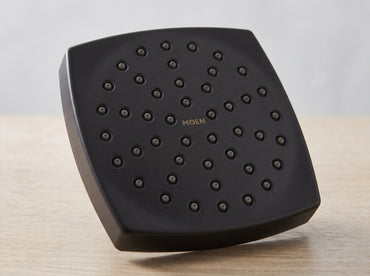
Matte black is not out of style for vanities, but it works best when the room repeats black in its mirror frame, lighting, or cabinet hardware. Its dark outline stands out against white porcelain, whereas brushed nickel blends more closely with gray tile and silver fittings.
For a small guest bath, black may work without changing every room fixture. For a tub-shower, changing to black trim is simple only if a black trim set exists for the valve already behind the wall. Replacing a sound concealed valve solely for color can require removing tile and opening the wall.
Do Matte Black Faucets Show Water Spots in Hard Water?
Matte black faucets show water spots because minerals left by dried droplets can form pale rings against the dark surface. Soap and toothpaste residue can also leave a visible film around the spout and handle. Brushed nickel generally disguises small marks better, although neither finish stops scale.
Choose matte black if you like the contrast and can dry the faucet after frequent use. Choose brushed nickel for a family sink that gets splashed throughout the day and is wiped less often. Use mild dish soap, a soft cloth, and water for routine cleaning, then rinse and dry; skip abrasive pads and check the maker's cleaner guidance before applying a mineral remover.
Is Polished Nickel in Style for Guest Bathrooms?
Polished nickel is still a suitable finish for a guest bathroom where you want reflective silver metal with a warmer cast than chrome. The shiny surface shows fingerprints, dried droplets, and toothpaste spots readily. Choose it for a vanity you can wipe between uses rather than a sink that stays wet most of the day.
Compare polished nickel and brushed nickel samples against the mirror frame, drain ring, and light fixtures from the bathroom doorway. For a warmer alternative, brushed gold has muted yellow tones and bronzed gold can look deeper. Choose a coordinated shade instead of assuming every gold finish matches.
What to Measure Before Buying New Fixtures
A replacement faucet must match the sink hole pattern, mounting thickness, and available supply connections. Use a tape measure, flashlight, and phone under the vanity before ordering. Close both shutoff valves and run the faucet to see if water stops before loosening any supply hose.
- Count the faucet mounting holes, including those hidden under the existing deck plate.
- Measure each hole diameter and the distance between neighboring hole centers and between the two outer centers.
- Measure the countertop thickness at the faucet mounting point and the clearance behind the handles to the backsplash.
- Check the shutoff outlet and hose ends for 3/8-inch compression or 1/2-inch IPS connections.
- Photograph the drain stopper and overflow opening, plus the supply lines beneath the sink.
- Photograph the shower handle, plate screws, and any valve markings visible behind the trim.
A three-hole sink with two 4-inch gaps has an 8-inch spread between the outside hole centers. Compare the deck plate width with the full outside edges of unused holes, not just their centers. Measure the spout reach from its mounting center to its outlet and compare it with your basin; water landing too close to the rim can splash. Leave enough space behind a lever for its full movement without hitting the backsplash.
How to Replace Shower Trim Without Opening Tile
Existing shower trim can be replaced without opening tile only if the new handle and plate fit the valve inside the wall. Cover the drain, remove the handle's cap or set screw, and then remove the escutcheon screws. Photograph the valve markings, stem, screw positions, and wall opening before ordering trim; matching only the brand name is not enough.
A showerhead is usually simpler because many shower arms have 1/2-inch IPS threads. Turn the shower off, grip the arm carefully so it does not turn inside the wall, and unscrew the head. Clean the exposed threads and follow the new head's sealing instructions; a cross-threaded connector may leak even when the finish matches.
For a tub spout, look underneath near the wall for a set screw, which commonly indicates a slip-fit connection over smooth pipe. A threaded spout instead turns off a pipe nipple. Measure the exposed pipe length from the finished wall and match both the attachment style and projection before ordering.
You can usually replace an accessible faucet, showerhead, or correctly matched trim with basic tools if the shutoffs work and the connections are sound. Ask a plumber to replace a concealed valve, change rigid supply pipes, repair damaged shutoffs, or investigate a leak inside the wall. Those jobs require work on hidden water connections and testing before the wall is closed.
Which Finish and Fixture Fit Your Bathroom?
The best fixture choice matches your existing mounting and water connections first, then the finish of the parts you are keeping. Use the table to separate straightforward surface swaps from projects that need plumbing access.
| Your Situation | Choose | Confirm Before Buying |
|---|---|---|
| Single-handle vanity | Single-handle faucet | Hole count, deck plate coverage, supply ends |
| Three-hole vanity | Two-handle or plate-covered faucet | Hole diameter and both center-to-center distances |
| Working shower valve, worn trim | Trim for that exact valve family | Valve markings, stem and plate screw pattern |
| Showerhead or handheld swap | Head or handheld assembly | Arm threads, mounting clearance and hose reach |
| Open-wall tub-shower remodel | Valve and coordinated trim | Pipe connections, valve depth and tub-spout route |
For a three-hole vanity, the Moen 84764SRN Genta Spot Resist Brushed Nickel mounts through three holes at least 1 inch across and uses 1/2-inch IPS connections for flexible hoses. It is listed as a widespread faucet, so confirm the required hole spacing on the Moen spec sheet before ordering. The Moen 84764BL Genta Matte Black uses the same hole and flexible-hose requirements; neither is intended for rigid or semi-rigid risers attached with coupling nuts.
For a low-arc single-handle sink, the Moen WSL84502SRN Adler Spot Resist Brushed Nickel has 1/2-inch IPS connections and a deck plate 6-1/8 inches wide. Its maximum mounting thickness is 1-3/4 inches, and the supplied spacer is discarded for a mounting surface thicker than 3/4 inch.
For a single-handle vanity in black, the Moen 84794BL Meena includes 3/8-inch compression flexible supply lines, an optional three-hole deck plate, and a push-down drain. The Moen 84794BZG Meena Bronzed Gold uses the same connections and supplied pieces, so the finish can decide between them once the sink fits.
For a handheld shower, the Moen 28586SRN Engage Magnetix is a six-setting handheld shower head with magnetic docking. Check its hose and mounting details on the product page, and compare the available wall space with nearby shelves or grab bars before choosing the docking position.
For an existing Posi-Temp shower valve, the Moen T2812NHBL Rizon Matte Black is shower-only trim without a showerhead; identify the concealed valve before ordering. For a tub-shower remodel where the valve is being replaced, the Moen 82760BZG Genta Bronzed Gold includes the valve, tub spout, showerhead, arm, and flange, allowing the new valve and visible fittings to be installed as a coordinated set.
Brushed nickel is not out of style for a bathroom with matching silver fixtures that still work. Keep brushed nickel for a high-use sink if you want minor marks to show less; choose black when dark hardware repeats throughout the room. Choose polished nickel for a reflective guest vanity or gold when a remodel lets you coordinate the warm tone. Replace exposed parts when their mounts and connections fit; involve a plumber when the valve or hidden piping must change.
Frequently asked questions
Is Brushed Nickel Still in Style?
Yes. Brushed nickel remains a useful choice for bathroom faucets and shower fittings because its muted finish works with wood, stone, and painted cabinets. The grain makes minor fingerprints less obvious than on reflective metal.
Is Brushed Gold Out of Style?
No. Brushed gold still works in bathrooms with coordinated warm metal accents and neutral surfaces. Compare a sample against lighting and cabinet pulls because different gold finishes may vary noticeably in tone.
Is Satin Nickel Out of Style?
No. Satin nickel has a muted silver appearance that works with many bathroom materials. Compare its sheen and grain against existing brushed nickel, since the finish names do not always indicate an exact visual match.
Is Polished Nickel Out of Style?
No. Polished nickel works well where you want a warm, mirror-like silver finish. Its reflective surface shows water drops and fingerprints more readily than brushed nickel.
Ready to choose? Browse our Brushed Nickel Faucets & Shower Fixtures collection at Aqualux Studio.
Related reading
Written by John Plumber, an experienced plumber who shares his personal opinion and hands-on experience.
This article reflects personal experience, not step-by-step instructions. Always follow the manufacturer's installation guide for your exact model, and hire a licensed plumber if you are not sure. Questions or corrections: support@aqualux.studio.